In my book, “Create Distinction,” I write about a phenomenon I called “The Ebert Effect.” It’s based upon a powerful lesson I learned from the famed movie critic, Roger Ebert, who passed away at age 70 after an extraordinarily valiant battle with cancer.
As I relate in the book, Roger asked me how many movies I was viewing in any given week — then, he told me he would watch three to five per DAY. In his wisdom, he commented, “That’s why quirky, offbeat films often receive rave reviews.
When one is overwhelmed with similarity, you begin to perceive that DIFFERENT IS SUPERIOR.
That is the basis of my work on distinction and the customer experience.
We’ve been overwhelmed with similarity, and we — as customers — are bored. We don’t see any meaningful differentiation between competitors in any given marketplace. When something different or even moderately unique comes along, we immediately begin to perceive it as a superior offering because of the effect Roger so eloquently described. It’s “The Ebert Effect.”
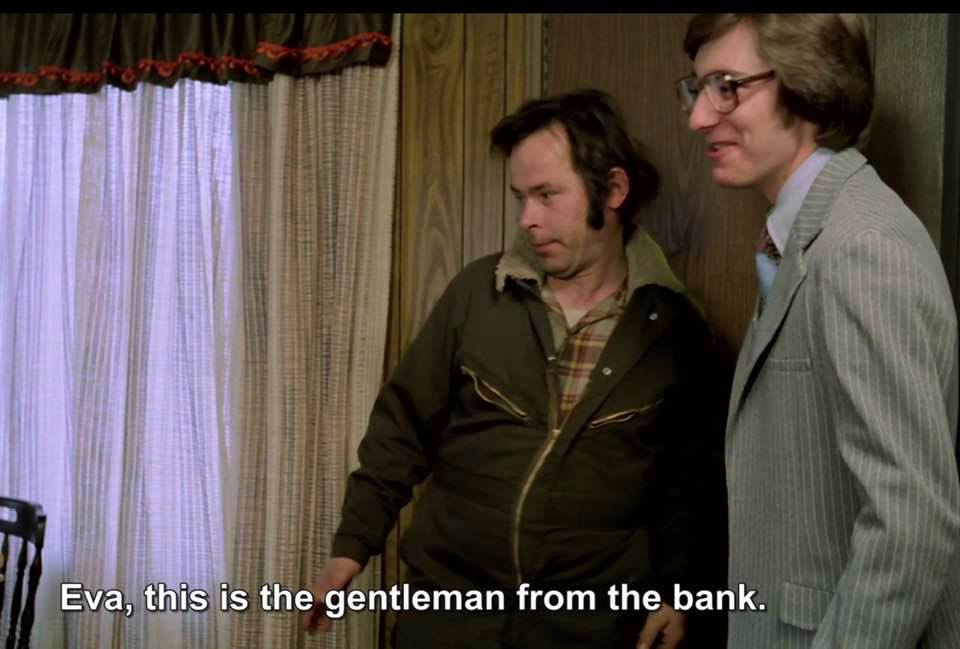
When Werner Herzog called me and asked me to play the “bad guy” in his film, “Stroszek,” I was honored beyond description. The only thing that topped that thrill was seeing the extraordinary review my meager attempt at the art form received from Roger Ebert, the reviewer I respected the most.
Then, when he featured the film and my performance in his first book on “Great Films” on his fifty favorite movies of all time, I was astounded… and grateful.
Roger took such delight at being the one who reunited Herzog and me after thirty years at his “Ebertfest” on the campus of the University of Illinois. He couldn’t contain his joy… and was scribbling notes as fast as he could to tell us how much he loved bringing us back together.
“I believe that if, at the end, according to our abilities, we have done something to make others a little happier, and something to make ourselves a little happier, that is about the best we can do.”
Take just a moment…right now…and write down the names of your two biggest competitors.
My guess is that if I could look at your list, I would see that you’ve listed other players in your specific industry. You have just proven that we stereotypically define our competitors — and that holds the potential of causing us great harm in the future.
As I was doing the background research for one of my earlier books, I found that what customers really wanted did not vary much from industry to industry. The reason is because customers blend ALL of their experiences — both personal and professional — as their criteria for evaluating YOUR level of performance.
This means that your competition, regarding how customers view the level of service and engagement you’ve created with them, is NOT limited to your specific industry. Your competition is the service they received the time they stayed at a Four Seasons…the shopping experience they have at Nordstrom or Neiman Marcus…the quality of the BMW they took for a test drive.
Not understanding your competition can be horrifically damaging. Folger’s thought its competition was Chase & Sanborn and missed out on what Starbucks created. Nokia thought its competition was Motorola and missed out on how Apple changed the industry.
I recently asked a group of executives this question: “If you were going to create a start-up company to compete with you…what would it look like?”
As you can imagine, there were many terrific ideas.
Then, I asked them, “So why aren’t you doing these outstanding points?”
You can guess the answers: “We’ve never done it that way before.” “Our competition isn’t doing it, so why should we?” And on and on.
The good news is…they decided to try.
And so should you.
To become more distinctive and stand out, change how you view your competition.
What is the purpose of delivering the Ultimate Customer Experience®?
For many, the primary goal is become distinctive from the competition. There have been numerous companies that have built themselves up by filling the niche of delivering excellent customer service. The Ritz Carlton, for example, famously authorizes every staff member to spend up to $2,000 per day to give each guest an exceptional experience. And the Ritz Carlton stands apart even in the world of luxury hotel chains as delivering truly exemplary customer service.
However, outpacing the competition in offering the Ultimate Customer Experience® is not limited to major hotel chains – or even big business. Plenty of smaller and supposedly “less glamorous” companies employ customer experience techniques that set them apart from the pack.
Using the Customer Experience to Conquer the Marketplace
Unless you’ve been traveling by train in France, you likely haven’t heard of the company Captain Train. Prior to its purchase for $187 million by Trainline Europe, it was a small travel website used to buy cheap French train tickets. What’s more, the market for selling cheap train tickets in France was already dominated by Voyages-sncf.com.
Captain Train saw an opportunity to offer something that consumers weren’t used to getting with their train tickets: an excellent customer experience. CEO Jean-Daniel Guyot created a policy where the company pledged to not only answer but also solve all customer inquiries withing 2 hours. When Captain Train actually delivered on that promise, they were able to achieve a whole new level within their industry.
(If you’ve read my latest book, “ICONIC,” you know how critical I believe it is that your PROMISE is congruent with your PERFORMANCE!)
Replacing Lost Items
One example of the Ritz-Carlton’s over the top customer service includes the hotel overnighting a laptop charger to a guest who had left it behind — along with an extra charger!
Smaller companies can also make up for the little disappointments in life. Kinsa Health manufactures thermometers that come with a small plastic cap to protect the tip. This is not sold as a stand-alone item. However when customers contact the company to request a new one, the company sends a replacement — without charge — along with a handwritten note.
Win Over Critics
A large part of the customer experience in a luxury brand hotel is making sure that no one is having a bad time. This should also be a concern for everyone seeking to deliver the Ultimate Customer Experience®!
Making certain that critics are taken seriously is especially important in the food industry — a lesson which Julia Baldwin, the CEO of After Dark Cookies has taken to heart.
Using the NPS score (Net Promoter Score), the company reaches out to their harshest critics, asking what went wrong. When people were truly dissatisfied, they are refunded AND given an additional free order, in the hopes they will have a more positive experience. Sometimes the most valuable feedback has come from these encounters…not to mention new raving fans!
Finding Strength in Small Size
Sometimes the solution for a growing organization to delivering the Ultimate Customer Experience® comes from realizing that your expanding size might mean that you need to do things differently from the traditional norms of customer service.
Wistia, a video hosting, creation and analytics company realized that they were not able to deliver quality customer service to scale via phones. Yet a large part of their success was based on the customer service they offered — especially going above and beyond throughout the set-up process.
They made the difficult decision to remove their phone number from their website. They switched instead to a robust online system of support. This included personalized welcome material such as emails and videos that help guide new customers through the set-up process. It has helped Wistia to continue being greatly admired for their customer service.
All too often, the examples of companies setting themselves apart with their customer experience come from the major players. We’ve probably heard enough stories about Apple, Amazon, Southwest, Nordstrom and the usual suspects.
It’s critical that small businesses – and even entrepreneurs and solopreneurs – discover that they should not be afraid to invest their resources to make themselves shine by delivering the Ultimate Customer Experience®
After a
recent seminar, I was asked to come up with three questions the organization
could ask internally that would help them understand what is necessary to drive
the delivery of an enhanced customer experience.
Tough question, right?
And, I admit, I have had to work on it for a bit. Here’s the best I can come up
with — and I’d appreciate if you have additional and/or better questions!
1) Do
customers want it?
Gourmet
quality lattes are certainly wonderful. But, would it add to the customer
experience to serve them if you’re running a funeral home? Doubt it. There are
other aspects that would probably be more desired by those at your business.
This
isn’t to suggest that we shouldn’t be innovative in what we deliver; however,
if there is a disconnection between our idea for the experience and our core
purpose, it’s not going to enhance the loyalty we desire from our customers.
2) Can
we provide it?
Note,
this isn’t necessarily “can we provide it” based upon our current team
or our current structure. However, we do have to ask ourselves if we
have the bandwidth to do what it takes to provide the experience that customers
are seeking. If we don’t have it immediately available, we should start thinking
of the specific steps that we will need to execute to make it happen in the
future.
3) Is
it worth it?
In my
first book, I wrote: “The purpose of any business is to profitably create
experiences so compelling to customers that their loyalty becomes assured.”
While
it’s reasonable to focus upon the importance of the word “experience,” it is
also easy to overlook the critical term, “profitably.”
There
are several aspects your organization must confront on a daily basis. This
simply asks, “Is it worth doing this instead of other
projects?” You only have a finite amount of time and scarce resources. The
question also insists that you project how the effort you’re making will
enhance the profitability of your organization in the future.
Just because it won’t drive immediate
income doesn’t mean it isn’t immensely important.
If you confront these three questions, you’re taking the right steps to develop what customers REALLY want in today’s hyper-competitive market in order to grow your business.
Currently, I’m in southern California about to speak at an
enormous conference for the National Association of Music Merchants (NAMM).
Tammy and I decided to come over from Las Vegas for NAMM just a bit early. We
heard so much from friends and fellow speakers about what an amazing event this
is we wanted to experience as much of it as we could.
And, after just one evening, I can already see how right
they are. We strolled around in the Convention Center area, the Hilton, and the
Marriott, and heard fantastic live music. We also enjoyed a spirit of fun and
positive good times from the huge crowd.
Candidly, there was a moment in the evening when Tammy asked
me if I was a little bit “down.” I replied that I was. There was fantastic
talent on display. It was all from singers and bands that few would recognize.
It dawned upon me – and made me a bit sad to consider — how miniscule these
performer’s chances were of finding a level of success like the icons of the
music industry.
So, why do they continue to
pursue it?
Several years ago, I interviewed several financial advisors
for a project to determine the elements of extraordinary success in that
business. As small and trite as it may sound, I found it came down to one
pivotal aspect.
Some advisors viewed creating a client experience as one of
those things that they had to do. They saw themselves as financial
experts who the marketplace expected to play nice with clients investing with
their practice. In other words, it wasn’t something they enjoyed – or even prioritized
– but, it was a cost of doing business, a chore to be performed.
However, the extraordinarily successful advisors had a
totally different outlook. They perceived themselves somewhat as a concierge.
Their goal was to be of service in any aspect of their client’s life. Many of
the most elite advisors were unable to describe how they could perform any
function of their fiduciary responsibility without including a superior client
experience.
These top producers expressed, “It’s just who I am.” An amazing
relationship with their clients was the source of their greatest joy in their
profession. It was part of their professional DNA.
I suspect a similar aspect is at play here at NAMM. Whether
they are making a lot of money or not, music is “just who they are.” The
engagement with the audience for the performers – or with their customers for
the music stores – is part of their professional DNA.
How do YOU feel about customer
engagement?
Whether it is an audience at a concert, a client in your
financial services practice, or a customer at your business, is delivering an
Ultimate Customer Experience ® part of your DNA?
Is creating the highest level of engagement “just who you
are”? Or, is it something you have to do because the marketplace now expects
it?
The difference might appear
subtle at first. But, the results created by the right mindset and approach can
generate exponentially better results and lifetime customer value.
Would you like to be in the audience at a
concert of a musician who felt as though she had to be there because her
manager and the marketplace expected it?
Or, would you rather attend a show by a
performer who felt that creating an amazing experience for her audience is just
“who she is” and part of her DNA?
YOUR audience – your customers – feel exactly the same.
Back in the days that I was working a little bit in
television, one staple of every newscast was the day’s stock market report. Each
day, every report would let you know what had just happened on Wall Street.
Yet, while you might be able to decide the stocks or funds
in which you would invest, seldom would you have any control over what those
companies did that would make your money expand or contract.
This past week, I spent time in Atlanta at the “Take the
Stage” event with my friends, Suzanne Evans and Larry Winget.
There, I saw first-hand committed individuals who were making
an investment they could have some control over — for they were underwriting
themselves.
When I was a student at Franklin College in Indiana, I
couldn’t help but notice a quote from Benjamin Franklin that was strategically
positioned on just about everything printed by the school: “An investment in
knowledge always pays the highest dividends.”
Some of the people in the audience where I spoke this week
will obtain significant returns on their investment in knowledge. Others will
not achieve anything.
The primary reason is
because not only do they control their investment — they also control the
actions they will take based on the knowledge they have obtained.
Several writers have observed that there are infinitely more
“wannabe” authors than published ones. It’s not just a function of talent. It’s
because…writers write. The oft-cited line is that the way you become an
author is simply “put the seat of your pants in the seat of your chair.” In
other words — to borrow from Nike — you just do it.
Please don’t misunderstand: you should have a well-balanced
portfolio and diversity in your investments. I’m not suggesting you
should invest in yourself…and nothing else.
Yet, I also do not believe it can be overstated that when you
invest in yourself, the dividends are not merely financial. There are a myriad
of benefits to personal and professional growth.
Scholarship money concept. Hand of male or female putting coins in jar with money stack step growing growth saving money investment
As we enter the final stretch for the year — and the decade — now might be a good time to look at your self-investment.
And, it’s also a great time to examine if you are taking the
action required to make it generate significant returns.
One more thing: it’s been “Ultimate Customer Experience ®
Week” on my podcast, PROJECT DISTINCT! We’ve briefly reviewed the Five Steps to
the Ultimate Customer Experience from my forthcoming book, “The Ultimate
Customer Experience” that has been totally revamped, rewritten, and rebooted. If
you didn’t catch this week’s episodes, please visit: https://ProjectDistinct.com –
In the next few weeks, we will be sharing how YOU can get
your complimentary copy of the book — just for listening to the podcast and
subscribing to my blog. It’s part of how we hope to create a “UCE” for YOU!