Customer Experience, Sales & Retail
At a recent conference, an executive told me that she used to be a general manager of a Walmart store. She related that the training she received was from former members of the inner circle of founder Sam Walton. She then had a dreamy look and said, “Those were great days! Oh, the way things used to be…”
Tradition is essential to many businesses and organizations. It can be a source of strength, providing a sense of stability in an ever-changing world.
- However, tradition can also be a source of stagnation, causing businesses to cling to old ways of doing things even when they’re no longer effective.
Steve Jobs famously told Tim Cook that Apple should never adopt the mantra of “What would Steve do?” He felt Disney had suffered and stagnated by always asking, “What would Walt do?” during times and situations that their founder had never encountered.
Innovation is essential for any business or organization that wants to stay relevant and competitive. But it’s not always easy to strike the right balance between tradition and innovation. Too much innovation can cause chaos and confusion, while too little can leave you stuck in the past.
It seems to me that the key is to find a way to respect and value tradition — while also embracing innovation. After all, the best way to serve your customers is to constantly look for new ways to exceed their expectations.
Here are four ways we demonstrate a respect for tradition:
1. We keep things fresh by constantly looking for new ways to do things, but we also recognize that some things are best left unchanged. It’s the oldest example around, but did we really need “New Coke”? I think not. However, recent innovations — like an energy drink that combines Coke and coffee — keep an established brand fresh. This approach can work for a small business just as effectively.
2. We strive to provide the best possible customer service, but we also know that sometimes the old-fashioned way is still the best way. In today’s world, it seems we want to throw out anything perceived as “old.” Yet, just because it has been around for a while doesn’t necessarily mean it is out of date. As a bourbon lover, I’d be the first to tell you that there’s a reason the “Old Fashioned” has not gone out of style. Don’t change something just to make a change.
3. We embrace change when necessary, but we also hold on to some things just because they’re a part of who we are. In other words, core values have always been critical — and you don’t need to change those. You can improve and tweak approaches, but “throwing the baby out with the bathwater” is seldom a profound strategy.
4. We value the experience and expertise of our elders, but we also recognize that they may not always be aware of the latest advances. It’s sad but true. You haven’t earned the right to comment or advise on an issue or situation you aren’t aware of. That means that if an experienced executive or entrepreneur believes she can make decisions about technology which she doesn’t know much about, she is deluding herself. No one knows everything. This is why I don’t listen to a Hollywood star’s political opinion. Playing an exemplary Hamlet doesn’t ensure that you know what you’re talking about regarding climate change. Respect people in the areas where they have earned respect.
- As we strive to provide the best possible customer experience, we must also realize that sometimes (perhaps often), “the way it used to be” really is the best way.
When I asked the woman at the event why the previous training was so superior to current efforts, she replied, “Because all of those involved with Sam Walton had a laser-focused approach on the customer. Today it has become too much about inventory management and getting required reports done and submitted to Bentonville.”
Let’s face it — she is right!
- Sometimes the way it used to be — is the right way…when executed congruently with today’s marketplace demands.
Customer Experience, ICONIC
It can be tempting to oversell our products and services in today’s competitive world. But this approach can backfire, making customers and prospects want to avoid you altogether.
This aspect has always struck me as slightly ironic, as no person wants to be around a pushy salesperson — even pushy salespeople when THEY are the customer! Yet we can easily fall into the trap of overdoing it when it comes to our own products.
Here are a few key things to keep in mind if you want to avoid over-selling:
- Remember that your customers are people too, and nobody likes to be “sold.” Instead of thinking about how you can make a sale, focus on building a relationship. Focus on building relationships with potential customers rather than solely on making a sale.
- In my book, ICONIC, we discuss how top producers in every industry are the ones who focus on creating Ultimate Customer Experiences ® — not those who push prospects to the point of surrender or escape. By getting to know customers personally, we can pave the road that will ultimately lead to more sales.
- Next, don’t be afraid of competition. In many cases, customers will appreciate having multiple options from which to choose.
- Your job is to become the most distinctive option so that you do all that is possible to ensure selection. This means you constantly ask: what is unique and remarkable about doing business with you — as opposed to your competition?
- Finally, focus on engagement rather than hard selling. If you can get customers involved with your product or service in a meaningful way, they’ll be more likely to buy from you down the road.
As mentioned earlier, customer engagement is a key to avoid the appearance of over-selling.
Here are four steps to help you improve:
- Make it easy for customers to give you feedback. You can make it easier for them to let you know when you provide them with a way to do business that is simple and convenient. Having this in place will also alert you when there is friction in your process that needs to be eliminated.
- Use social media to start a conversation. For example, use short videos that explain the value of your product or service (from the customer’s perspective) and post them on TikTok, YouTube, Facebook, and Twitter. If you’re not using social media to its maximum benefit for connecting with customers, you’re missing out on a huge opportunity.
- Get personal. Customers like doing business with people they know and trust — get to know your customers on a personal level. Examine your CRM and other tools to see if you’re recording easily accessible information that helps you remember — and use — your customers’ personal preferences.
- Make it fun. As mentioned, nobody wants to be sold to — but everyone likes to have fun. If you can find ways to make your product or service more enjoyable, customers will be more likely to engage with you — and therefore, buy from you. The goal is NOT to be frivolous — but it IS to enhance the enjoyment factor of doing business with you. No one likes friction when dealing with any organization.
The key is to strike the right balance between promoting your wares and engaging with potential customers. If you come across as too pushy, people will tune you out. But if you’re too subtle, they may not even realize that you have something to offer.
Finding the sweet spot can be tricky, but it’s worth taking the time to get it right. By following these tips, you can avoid over-selling and instead focus on building relationships, engaging with customers, and becoming the most distinctive option in your industry.
(We would love to assist you in finding that “sweet spot” in customer engagement! Contact me here for more information on how keynote presentations, consulting, coaching, and virtual training can move you and your organization to distinction.)
Customer Experience
Purpose can be a powerful motivator for individuals and teams. When people feel that their work is meaningful and they are contributing to something larger than themselves, they are more likely to be engaged and enthusiastic about their work.
Purpose can also help to create a strong team culture. When everyone is aligned around a shared goal or vision, it can help to build trust and cooperation. When team members feel like they are part of something larger than themselves, they are more likely to be committed to the team and its success.
Recently, I had the privilege of keynoting a conference for SkinCure Oncology. While neither they as company, nor their process of treating skin cancer called GentleCure, is widely known at this point, I was profoundly moved by how the purpose of the organization inspired and motivated their team.
The meeting began with a video showing patients who had received MOS surgery to deal with their cancer. Frankly, the video was graphic and upsetting. It displayed the facial scars and damage to the patient’s appearance that was the result of this common procedure.
GentleCure from SkinCure Oncology treats the cancer differently — and with a success rate over 99%. The patient’s appearance is preserved and the procedure earns a customer satisfaction score of over 99%!
The mission of SkinCure Oncology is to provide patients with a choice beyond the traditional approach of MOS. Unfortunately, most dermatologists aren’t yet offering this approach as an option to their patients — and SkinCure is on a mission to change that!
What’s your mission? I don’t mean something as simplistic as your “why” — which can easily vary from one team member to another. Your mission is your organization’s overriding purpose for your very existence. It doesn’t have to be grandiose (although it might be), but it does have to be something more than “closing transactions” or “making money.”
Three ways to discover your purpose:
- customers — what need are you solving for them?
- employees — what motivates them to do their best work?
- shareholders/stakeholders — what is your ultimate contribution to the world?
Answering these questions can help you discover your purpose as an organization — and that purpose can be a powerful motivating force for your team! Your ultimate contribution can be changing the face of skin care for cancer patients. Or it might be something as simple as creating delight and memories for families at a dining experience. Whatever your mission, if you want to inspire your team, start by sharing your purpose with them.
Help them understand why what you’re doing matters, and how their work fits into the bigger picture. It’s a simple but powerful way to build engagement and commitment.
And when you have engaged and committed teams, you create loyal and enthusiastic customers! That’s a recipe for success and distinction for any organization.
(Sometimes we all need a bit of assistance in finding our purpose. It’s the old saying that we can’t see the forest for the trees — an outside perspective can help! If that the case with you, we would love to assist. Contact me here on LinkedIn to learn more about how training, coaching, consulting, and keynote presentations from our organization can be a catalyst for your organization to create distinction and deliver an Ultimate Customer Experience!®)
ALL Business is STILL Show Business, Customer Experience, Leadership, Personal Distinction
Recording artists often release a “greatest hits” compilation. And let’s face it, when you go see your favorite singer or band, you certainly want to hear them play the songs you know by heart.
Yet, all my friends in the music business seem to have one thing in common. No matter how many hits they’ve previously recorded, they continue to create new material.
There’s a lesson there for every business and any leader.
Just as in show business, experimentation and change are essential to continued success no matter how successful you are. That’s why the most innovative companies encourage their employees to experiment and take risks. And it’s why the best leaders are always looking for ways to improve.
If you want your business or career to continue to flourish, don’t rest on your laurels. Many years ago, Rick Nelson revitalized his stagnant career with a song named “Garden Party.” In the tune, he talked about playing all the old hits but realized that “if memories were all I sang, I’d rather drive a truck.”
- Unfortunately, what we take for granted in the music industry isn’t always embraced in the corporate world. We seem to think we must keep “playing our hits” without developing new methods and approaches to dealing with customers.
I often inquire during my presentations, “Imagine I asked your customers to name something you’re doing differently or better to serve them today than how you did a couple of years ago. Would they be able to name an innovation or improved practice right away?” At this point, many in the crowd look down or shift their eyes away. You know the reason — most of us just keep doing what we’ve always done.
Here are three reasons we need to continue to innovate:
1) Experimentation allows us to find new and better ways to serve our customers. If we fail to try something unique — and our competition is willing to be creative — we run an enormous risk of turning our best clients into the competitor’s best prospects!
2) Change is essential to our survival. In the words of Charles Darwin, “It is not the strongest species that survives, nor the most intelligent, but rather the one that is most responsive to change.”
3) Innovation distinguishes us from our competition. If we’re not constantly striving to be better than those we compete against, we’ll soon find ourselves struggling to keep up.
If you’re not innovating, you’re falling behind. Don’t be afraid to experiment.
The next time you’re tempted to play it safe and just stick with what’s worked in the past, remember that your greatest hits may not be your greatest future.
- If you need to have your thinking challenged positively — or bounce ideas off of a leader to stimulate your creativity — I’d love to help. Whether through personal coaching, professional consulting, keynote presentations, or virtual training programs, we’re ready to help you expand your number of hits and earn standing ovations from your audiences (your team and your customers)! Just contact us for more information.
Business Distinction, Customer Experience, ICONIC, Sales & Retail
At a recent event held at a Four Seasons hotel, an audience member for my keynote presentation came up following my program. “Hi,” he said, “I’m Jerry – and, boy, do I have a story for you!”
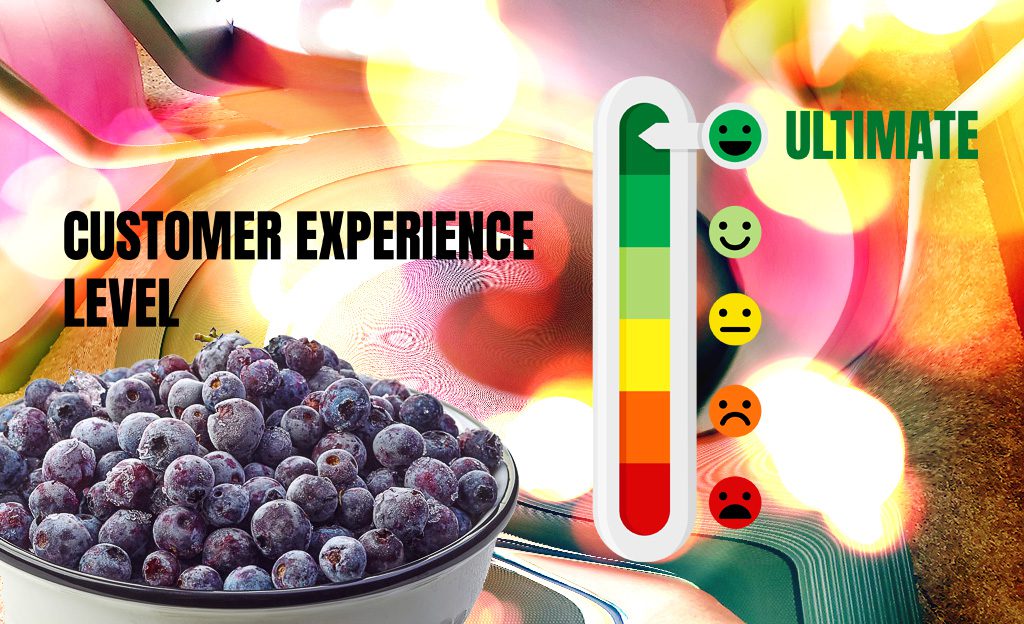
“Yesterday, my wife and I were dining at the breakfast buffet here at the Four Seasons,” Jerry told me. “As we proceeded down the line, I just happened to mention to my wife that I wished they had blueberries available. Don’t get me wrong — they had a beautiful array of fruit. It’s just that there weren’t any blueberries, which are my favorite!”
“Imagine my surprise,” Jerry continued, “when mere moments later, a Four Seasons team member came to our table with a bowl of the most beautiful blueberries you could imagine! A young lady happened to overhear my conversation with my wife. She told me, ‘We don’t want you to be disappointed with ANY part of your experience at Four Seasons!'”
As Jerry and I continued the conversation, he was supremely impressed with two aspects of this encounter:
- She listened to the customer.
- She took action to ensure the customer received exactly what he wanted.
Let’s examine both steps:
First, listening to the customer. This Four Seasons team member was tuned in to what Jerry wanted and needed. She didn’t just hear the words. She listened to the emotion behind them. Because she listened, she knew that blueberries were important to him and acted on it.
Listening is critical because it communicates to the customer that they are essential and that their wants and needs are a priority. How many times have you been in a customer service situation where you feel like you’re not being heard? We, as customers, feel like our voices are falling on deaf ears all too often. Too often, we as customer service professionals, stop at listening. We need to go the extra mile and take action to ensure that our customers receive what they want.
When we take the time to listen to our customers, it shows that we care about them and their experience.
Second, taking action to ensure the customer received exactly what he wanted. This Four Seasons team member not only listened but also took action to ensure Jerry’s happiness. She knew that blueberries were important to him, so she brought him a bowl of them.
Consider what the alternatives were for the employee —
- She could have been daydreaming or thinking about something else about her job and not tuned in to the customer.
- She could have thought, “We have LOTS of great fruit…and it’s not enough for this guy?”
- She could have told her manager, “By the way, a customer noted there weren’t blueberries. Maybe we should put some out tomorrow.”
Instead, she took ownership of the customer’s modest identification of a missing element.
Educating your team to own the problem and create the solution is critical.
Taking ownership of customer issues and being proactive in solving them is another hallmark of delivering a difference. Often, the small things that we do for our customers make the most significant impact.
Jerry’s story is an excellent reminder of how important it is to listen to our customers and take action on their behalf. When we do this, we deliver an Ultimate Customer Experience. What Jerry experienced was a great example of a UCE. His Four Seasons team member went the extra mile to ensure that he received exactly what he wanted.
Here’s an additional aspect — most of us know that this isn’t a unique experience for Four Seasons customers — it’s part of their DNA.
As my pal, Joe Calloway often discusses, most companies share an experience wildly out of the norm. They want you to know about the employee who walked a mile through the snow to be certain that a customer got their pack of chewing gum.
The problem is that the same store doesn’t do the basic blocking and tackling, which ensures that the little things are done right for every customer, every time.
Remember, customers do not want us to make it right. They want us to GET it right!
Because of the actions of this employee, Jerry left feeling appreciated and delighted with his experience at the Four Seasons. In fact, he was so impressed, he felt compelled to share his story with me — and now, I’m sharing it with you!
This is vitally important! When customers share your success stories, they become your advocates in a crowded marketplace. (And what business doesn’t want more advocates?)
When your team (and you) can deliver this level of customer experience, you’re well on your way to becoming ICONIC!
ALL Business is STILL Show Business, Business Distinction, Customer Experience
When people think of success — whether business success or personal success — most usually think first of the logical factors involved. These include financial literacy, marketing skills, or management abilities.
When my first business book, ALL Business is Show Business, was released twenty years ago, my assertion that there was a significant element required for success that was almost always overlooked was met with considerable criticism.
The missing factor is EMOTION.
My point in my book was that just as a movie or television episode attempts to make you laugh, cry, become angry, or scared, emotion plays a crucial role in all fields of business, as well! Being able to understand how other people feel and being astute at influencing emotion are essential aspects of success in every field.
While intellect is critical when considering what makes a successful company or career, it’s still only half the picture. The rest of the picture involves understanding human emotion and communicating with other people — both customers and employees — on their emotional level, rather than just their intellectual level.
An old proverb says, “the hand that rules the mind also rules the world.”
Emotion often determines how people think, what they do or don’t do, and why they act in a certain way. Because emotion plays such a critical role in success, a mastery of the basic techniques of emotion management is crucial to business success. The real key to understanding emotion is recognizing its effect on the customer or employee decision-making process.
You’ll obviously become more successful if you can motivate other people to take action — whether it’s buying your product or becoming more productive as employees.
This past week, Dr. Sigal Barsade passed away at the young age of just 56. As the New York Times reported, “Dr. Barsade, a professor of management at the Wharton School, the business school of the University of Pennsylvania, was a pioneer in what organizational psychologists call the affective revolution: the study of how emotions, not just behavior and decision-making, shape a workplace culture, and in turn how they affect an organization’s performance.”
If emotion is effectively used, it greatly benefits the bottom line of any company.
As the Times article also reported,” ‘For a long time, emotions were viewed as noise, a nuisance, something to be ignored,’ Barsade told MIT Sloan Management Review in 2020. ‘But one thing we now know after more than a quarter-century of research is that emotions are not noise — rather, they are data. They reveal not just how people feel, but also what they think and how they will behave.'”
This is a crucial realization. Successful businesspeople look at emotion as a source of insight and realize that emotion can be influenced and leveraged positively, like every other resource in the workplace.
In summary:
- Being able to understand how other people feel and being astute at influencing emotion are both indispensable aspects of success in every field.
- You’ll obviously become more successful if you can motivate other people to take action — whether it’s buying your product or becoming more productive as employees.
- Emotion often determines how people think, what they do or don’t do, and why they act in a certain way.
- Using emotion effectively greatly benefits the bottom line of any company.
- Emotion is not noise — instead, it is data. It reveals how people feel, what they think, and how they behave.
Because — just as it was true twenty years ago — ALL business IS “show business.”