Business Distinction, Sales & Retail
I recently received mail that included a business card. Interested in the organization — as it is a business very similar to the one my late wife, Sheri, worked in for many years — I visited the website address listed. I noted something that really struck me…
It was the headline, “What Makes Us Different.”
Naturally, as I’m fascinated by what makes something stand out from the competition, I read the bullet points of what they believed separated them from the others in their industry:
- experience (Like the competition is totally staffed with rookies who have no background?)
- depth of knowledge (So, you’re asserting that the competition is dumber than you, right?)
- founded by innovative entrepreneurs (Since, by definition, the competition had to be founded by entrepreneurs, too, I guess they were started by “traditional entrepreneurs”?)
- depth in multiple market segments (As my late wife said the same thing about the company where she worked in the late ’90’s, I promise you this is nothing new.)
None of these points would be considered by savvy prospects or clients to make the company different! They would be required, however, to make that company relevant in the hyper-competitive industry in which they play. However, there is absolutely zero here… taken from a client’s or prospect’s perspective… that would truly qualify to be listed under the heading, “What Makes Us Different!”
The company has displayed they don’t “get” what would make their customers perceive them as superior to the competition! (And, if you don’t understand that… why wouldn’t a prospect also surmise that you might not “get” other salient aspects ofdoing business together?)
What should the company do?
- Ideally, follow the plan outlined in “Create Distinction,” and go through the process of the Four Cornerstones. Develop something that truly DOES “make you different.”
- In the meantime, ASK YOUR CUSTOMERS what “makes you different.” I’d much rather read on your website that Jane Doe of the XYZ Corporation said your “depth in multiple market segments stood out from the others,” than hear that same claim from you!
AND, by asking your customers what makes you stand out, you may uncover areas you’ve overlooked that are of primary importance to those doing business with you!
Here’s the ultimate litmus test:
Look at the website of your top competitor. What do THEY say makes THEM “different”?
If it’s the same thing that your organization is stating — then those points have little traction in creating differentiation for either of you from the customer’s perspective.
THINK DISTINCT. THEN, GO OUT AND CREATE DISTINCTION!
Business Distinction, Customer Experience, Sales & Retail
Take just a moment…right now…and write down the names of your two biggest competitors.
My guess is that if I could look at your list, I would see that you’ve listed other players in your specific industry. You have just proven that we stereotypically define our competitors — and that holds the potential of causing us great harm in the future.
As I was doing the background research for one of my earlier books, I found that what customers really wanted did not vary much from industry to industry. The reason is because customers blend ALL of their experiences — both personal and professional — as their criteria for evaluating YOUR level of performance.
This means that your competition, regarding how customers view the level of service and engagement you’ve created with them, is NOT limited to your specific industry. Your competition is the service they received the time they stayed at a Four Seasons…the shopping experience they have at Nordstrom or Neiman Marcus…the quality of the BMW they took for a test drive.
Not understanding your competition can be horrifically damaging. Folger’s thought its competition was Chase & Sanborn and missed out on what Starbucks created. Nokia thought its competition was Motorola and missed out on how Apple changed the industry.
I recently asked a group of executives this question: “If you were going to create a start-up company to compete with you…what would it look like?”
As you can imagine, there were many terrific ideas.
Then, I asked them, “So why aren’t you doing these outstanding points?”
You can guess the answers: “We’ve never done it that way before.” “Our competition isn’t doing it, so why should we?” And on and on.
The good news is…they decided to try.
And so should you.
To become more distinctive and stand out, change how you view your competition.
ALL Business is STILL Show Business, Business Distinction, Sales & Retail
What’s
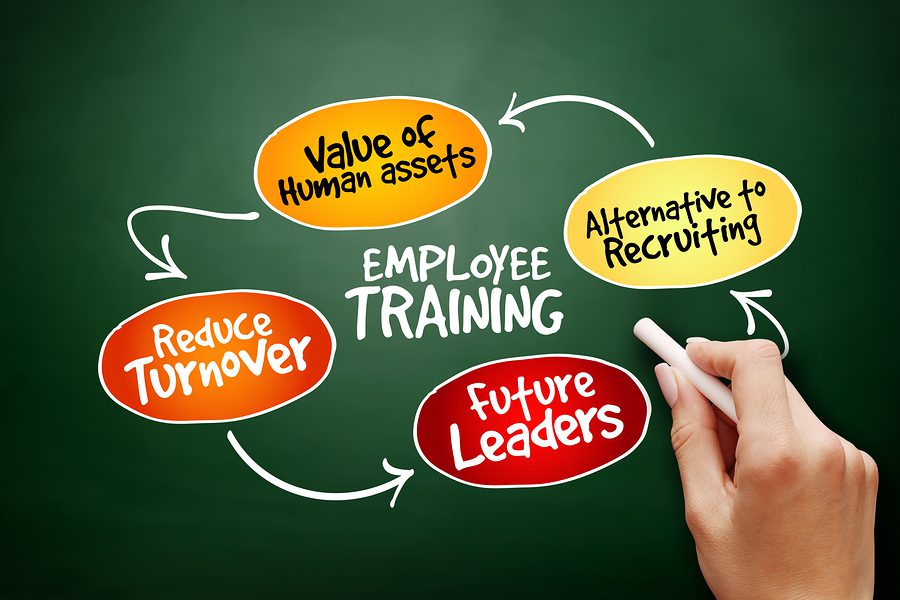
your initial, gut-level reaction to this question: Are your employees primarily an asset…or an expense…to your business?
The
critically important aspect is this: If you see your people as primarily
an expense — then, that expenditure becomes something we need to minimize.
In other words, we’re taught in business that profit comes from, in part,
reducing expenses. The more we keep our expenses in check, this basic
theory of business goes, the greater the likelihood we will become more
profitable.
However, the more we think about it, that’s simply not the total
picture.
Assets are vital points in our business that we seek to amplify
and make more valuable. When you see your employees as assets to
be cultivated and enhanced — as opposed to expenses you need to reduce and
minimize — you discover those assets becoming more productive…and,
therefore, more profitable for your
business.
Treat
your colleagues like the assets they are, and they’ll provide Ultimate Customer
Experiences ® for your customers and prospects and maximize sales opportunities
that will help you create distinction and grow your business.
For
more information on employee training and development options designed for
custom outcomes, contact our office at 800-838-6980 x2, or email shelley@scottmckain.com.
Business Distinction, Customer Experience, Sales & Retail
After a
recent seminar, I was asked to come up with three questions the organization
could ask internally that would help them understand what is necessary to drive
the delivery of an enhanced customer experience.
Tough question, right?
And, I admit, I have had to work on it for a bit. Here’s the best I can come up
with — and I’d appreciate if you have additional and/or better questions!
1) Do
customers want it?
Gourmet
quality lattes are certainly wonderful. But, would it add to the customer
experience to serve them if you’re running a funeral home? Doubt it. There are
other aspects that would probably be more desired by those at your business.
This
isn’t to suggest that we shouldn’t be innovative in what we deliver; however,
if there is a disconnection between our idea for the experience and our core
purpose, it’s not going to enhance the loyalty we desire from our customers.
2) Can
we provide it?
Note,
this isn’t necessarily “can we provide it” based upon our current team
or our current structure. However, we do have to ask ourselves if we
have the bandwidth to do what it takes to provide the experience that customers
are seeking. If we don’t have it immediately available, we should start thinking
of the specific steps that we will need to execute to make it happen in the
future.
3) Is
it worth it?
In my
first book, I wrote: “The purpose of any business is to profitably create
experiences so compelling to customers that their loyalty becomes assured.”
While
it’s reasonable to focus upon the importance of the word “experience,” it is
also easy to overlook the critical term, “profitably.”
There
are several aspects your organization must confront on a daily basis. This
simply asks, “Is it worth doing this instead of other
projects?” You only have a finite amount of time and scarce resources. The
question also insists that you project how the effort you’re making will
enhance the profitability of your organization in the future.
Just because it won’t drive immediate
income doesn’t mean it isn’t immensely important.
If you confront these three questions, you’re taking the right steps to develop what customers REALLY want in today’s hyper-competitive market in order to grow your business.
Customer Experience, Sales & Retail
In a program I was conducting yesterday here in Sydney,
Australia, I heard about a customer who had purchased a $90,000 automobile,
only to find the battery in his key fob wasn’t working after only ninety days.
“No big deal,” the customer reportedly thought, “I’ll just
get the dealer to replace it.” And, of course, they did.
However, what the customer didn’t expect was a bill for $15.
The problem for the customer wasn’t really an issue about
whether a battery was covered under his warranty. It was something
infinitely more important: how his patronage was valued by the dealership.
After dropping $90K on a car and being a good customer, the unwillingness of
the dealership to take care of a small battery left him with a terrible taste
about his relationship with their organization.
The dealer got their fifteen bucks. And, they lost a
customer that was probably going to spend tens of thousands of dollars with
them over the next few years.
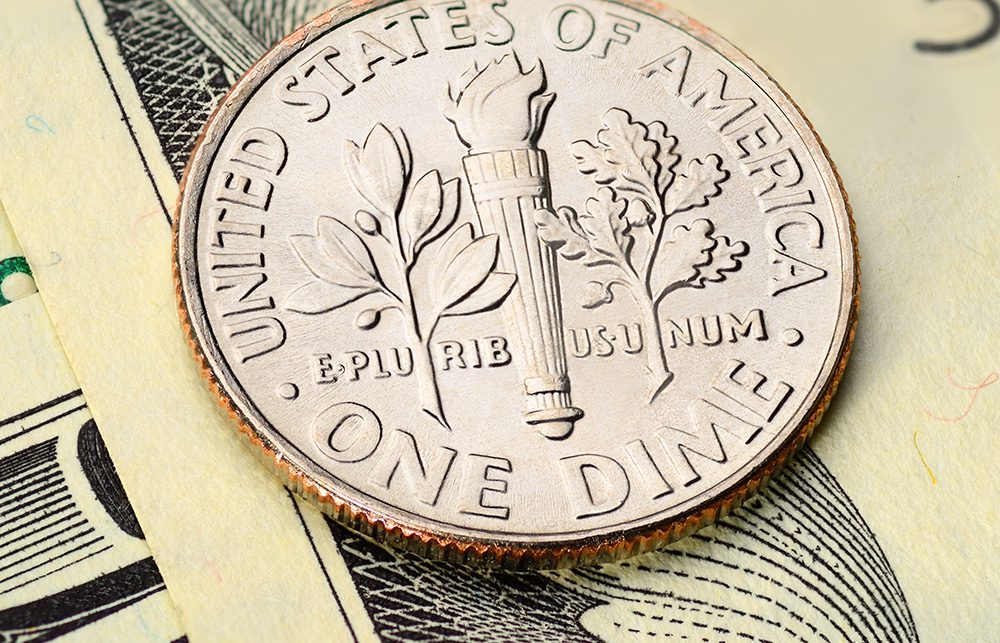
They were stepping over dollars to get to dimes.
In a recent episode of my podcast, PROJECT DISTINCT, I
related the story of an executive who had spent thirty nights in a hotel here
in Sydney. When he awoke to his room temperature in the upper 70s, he called
the front desk to be told the air conditioning had been turned off “for the
season.” The hotel not only refused to make things right for him, they told him
he was “lucky” they didn’t assess a charge for early checkout.
This great customer won’t return to the hotel.
They were stepping over dollars to get to dimes.
The problem for many of us is that we will read these
examples and believe – while unfortunate to those who have had to endure the
indignity – that kind of mistake won’t occur on our watch. Yet, it often does.
Team members who believe the enforcement of policy is more
important than a thrilled customer is the cornerstone of this challenge.
Leaders must be committed to establishing a culture where everyone’s job is
less about following procedure than pleasing our patrons.
- I don’t believe that anyone at the car dealership
or the Sydney hotel went to work that morning with the intention of destroying
the lifetime value of a good customer.
- But, somewhere along the way, no leader ensured
that every team member knew that they were never supposed to step over dollars
to pick up dimes.
By the way, does YOUR team know that? Are you CERTAIN?
Sales & Retail
OK, I’ll come right out with it: I despise many of the
approaches that are prevalent today about how sales professionals should think
and act.
It’s my belief that some of these approaches are not only
wrong – they can end up being toxic to the careers and livelihoods of those
who use them.
On Instagram this past week, I saw a video from a so-called
“sales guru” pushing his online course to help you “close more deals” while
wearing a t-shirt that said, “I’m a sales bad-ass!”
- For some reason, I cannot imagine a wife turning
to her husband saying, “Honey, who can we get to help us plan for our
retirement? Who could best recommend the investments we need for our future?” —
and his response is, “How about the ‘sales bad-ass’?”
- Or, “Honey,” he says, “you know, I think it’s
time for us to get a new car. What would you prefer?” “I don’t care,” she
responds, “as long as we high-pressured into buying one by the ‘sales
bad-ass’!”
So, why do we see all these guys – and, yes, they are almost
always male (and that’s nothing for my gender to be proud of) – telling you
that if you’ll attend their seminar or buy their course they can show you how
to multiply your business by ten, fill your funnel with prospects that convert,
close any prospect, crush any objections, become a power player in the world of
sales and more?
Because, sadly, there are so many people who are desperate
to succeed in sales that they will listen to – and purchase – this advice. They
believe that if they can only learn that “secret” that the “guru” delivers,
they too will have the riches they covet.
Here are three points you need to know – but, probably that
you don’t want to know:
- There are NO secrets to sales success that
“they” (whoever “they” are) don’t want you to know. In this time where
there are even network television shows displaying how magicians do their
tricks…when you can find anything on the Internet…there is no magic
bullet that will make sales work that anyone is trying to keep from you.
- One way to sell more is to become the person
you’d like to buy from. Seriously – ask yourself if YOU’D like to deal with
the “sales bad-ass” or the guy trying to 10X HIS business but doesn’t give a
damn about YOURS? Chances are, you want to engage with someone with a sincere
concern about solving your problem and fulfilling your needs. Be THAT person –
not the “always be closing” huckster.
- If you’re learning hard-core sales, you’re
learning an outdated model. Do you want the doctor who hasn’t learned
anything about medicine since the 1980’s? Then, why do you want to be a sales
professional trapped in a by-gone approach? The type of sales these “bro-sales”
guys are proclaiming is based upon a time when the salesperson had more
information than the customer – which is clearly not the case anymore
when we can learn about your products and services online before we talk with
you. And, sales are moving from a
transaction model to a subscription model. Today’s sale is not about closing
the deal – it’s about opening and maintaining a relationship. No one wants to
be in an on-going relationship with a high-pressure, aggressive jerk.
You will do better over an extended period – and will be more appreciated and revered by your customers – if you follow the approach of engagement…rather than the “bad-ass” approach that has become so out-of-touch with the real customers of today’s marketplace.