In today’s hyper-competitive market, the alignment between what your business promises and the performance that it delivers is not just a matter of integrity; it’s a cornerstone of customer experience and loyalty.
I highlight the criticality of this congruence in my book “ICONIC.” When a business’s marketing claims do not match the customer experience, it leads to a trust deficit, adversely affecting its reputation and bottom line. And, let’s face it, in most organizations, the people making the promise are seldom the ones who have to deliver the performance for your customers.
Your goal in 2024 should be to make certain that your promises and performances are in perfect alignment.
The Promise-Performance Gap
The promise-performance gap emerges when there’s a disconnect between the expectations set by marketing and the actual customer experience. This discrepancy can be particularly damaging. A study by PwC found that 73% of consumers cite customer experience as a significant factor in their purchasing decisions, but only 49% of U.S. consumers say companies provide a good customer experience. This gap indicates a widespread issue in businesses failing to live up to their marketed promises.
Impact on Customer Loyalty
Loyalty is earned when a business consistently meets or exceeds the expectations it has set. According to Accenture, 52% of consumers have switched providers due to poor customer service, highlighting the direct impact on customer retention. When the experience falls short of the marketing hype, customers feel misled, leading to dissatisfaction and churn. Everyone spending money with your business has the right to receive an Ultimate Customer Experience. ®
Brand Reputation and Word of Mouth
In the digital age, word of mouth travels fast. A survey by BrightLocal revealed that 87% of consumers read online reviews for local businesses in 2020, up from 81% in 2019. Negative experiences, especially when they contradict marketing claims, can quickly escalate into a crisis through online reviews and social media, affecting potential customers’ perceptions.
The cost of not aligning promises with performance is not just in lost customers but also in the additional effort required to regain trust. Harvard Business Review notes that acquiring a new customer can be anywhere from 5 to 25 times more expensive than retaining an existing one. This cost becomes exponentially higher when businesses must invest in damage control and rebuilding their reputation.
Best Practices for Alignment
1. Understand Customer Expectations: Regularly gather customer feedback to understand their expectations. This information should guide marketing messages to ensure they’re realistic and achievable.
2. Internal Alignment: Make certain that all divisions, particularly marketing and operations, are in sync. The promises made in marketing campaigns should be well understood and executable by the teams responsible for delivering the customer experience.
3. Regular Training: Employees should be regularly trained not just on their job functions but also on the brand’s values and promises. This ensures that everyone is equipped to deliver on those promises consistently.
4. Monitor and Adapt: Continuously monitor customer feedback and market trends. Be ready to adapt both your marketing messages and operational strategies to stay relevant and true to your promises.
The congruence between promise and performance stands at the core of customer trust and loyalty.
In an era where customers have endless options, the businesses that create distinction are those that understand and implement this congruence in every aspect of their operations.
By aligning marketing promises with customer experience, you will not only foster loyalty but also build a sustainable model for long-term success.
Today, I’m keynoting a major conference in the financial services industry being held near San Diego. Over 1500 professionals have gathered to discuss the present and future in the world of payments. Think about it for a second: you tap, insert, or swipe your card to pay for a purchase. In almost the blink of an eye, the information about your card is transmitted to card companies, payment processors, and banks. Businesses receive their payments quickly and you get your purchase secured instantly.
Here’s the problem – the payments industry, like many others, has improved its services and delivered to its customers at such a high level that we all take their work for granted. What do you do when customers assume you will consistently deliver excellence – so they stop paying attention to you?
It’s the curse of competence—when the exceptional becomes expected, and the extraordinary seems ordinary, your distinction in the marketplace can fade into the background.
There is a fine line between being reliable and becoming invisible.
In a world saturated with choices, customers often gravitate towards familiarity, comfort, and reliability. Businesses that consistently deliver on these fronts do themselves proud but risk an insidious outcome: being taken for granted.
This complacency from customers arises when they subconsciously perceive your exceptional service as the standard. The challenge, then, is to reignite the spark of distinction without compromising the quality that earned customer loyalty in the first place.
The first step to combat this challenge is recognizing that distinction in a commodity marketplace is not just about what you do — but how you do it. It’s about infusing the customer experience with elements that are unexpected yet deeply appreciated.
This can range from personalized interactions to innovative service delivery methods. It’s these nuances that can elevate a brand from a mere option to a memorable experience.
To create distinction, it’s crucial to innovate continuously. This doesn’t always mean grand gestures; sometimes, the smallest changes can make the biggest impact. For example, a handwritten note of thanks included with a purchase can create a personal touch that stands out. Innovation can also mean employing technology to provide smoother, more intuitive service interactions that save the customer time and hassle.
Another key to standing out is engagement. In an era where digital interactions are the norm, creating genuine, human connections can be a differentiator. Engage with customers beyond the transaction. Seek their feedback, not just through surveys, but through direct communication. Show them their input is not just collected – it is acted upon.
When customers see their voices shaping your service or product, they feel a partnership rather than a patronage.
An often overlooked aspect of creating distinction is employee empowerment. When employees are vested with the authority to make on-the-spot decisions in favor of customer satisfaction, it can lead to unique, memorable customer experiences. This empowerment also fosters a culture of innovation within the organization, as employees are more likely to suggest improvements when they feel their contributions are valued.
Consistency in excellence is also vital. While pursuing the new and different, a business must ensure that its foundational services remain unshakably excellent. Consistency breeds trust, and trust is the soil in which loyalty grows.
To be taken for granted is to be trusted, but to be distinctive is to be treasured.
Finally, as I have frequently written, storytelling is a powerful tool for distinction. Every brand has a story, and sharing it can create an emotional connection with customers. A story that resonates with your audience can transform your business from a faceless entity into a character in their life story.
Narratives about your brand’s heritage, your team’s commitment, or your community engagement can make your business relatable and memorable.
Being taken for granted is a testament to a business’s success but can also be a warning sign of potential stagnation.
Creating distinction in a commodity marketplace requires a commitment to innovation, engagement, empowerment, consistency, and storytelling.
By implementing these strategies, businesses can ensure that their customers see them as not just a choice — but the choice.
Earlier this week, a great friend of mine was subjected to negative comments on social media. The reason some cited was that she was a “phony” — because she always seemed so upbeat. As I posted, it struck me that we never say a negative person is a phony. That critique seems reserved for those who choose to express an optimistic attitude.
However, my experience and research has taught me that in the quest for distinction within any organization, one vital component resonates at the core of success: a positive attitude. A company with a culture infused with optimism doesn’t just thrive, it stands out. Here are six reasons why this essential aspect is pivotal in creating a distinctive business culture, no matter the size of your company.
1. Unleashing Potential
A positive attitude unshackles potential. It energizes, motivates, and inspires employees to transcend the ordinary. It’s about seeing challenges not as roadblocks, but as gateways to creativity and innovation. A culture of positivity instills a sense of purpose, propelling an organization towards distinction.
2. Strengthening the Customer Experience
As someone who has extensively studied, written, and spoken about organizational distinction and customer experience, I firmly believe that positivity is integral to delivering the Ultimate Customer Experience®. When positivity permeates a company, it’s felt by every customer. It translates to engaged employees, superior service, and ultimately, customer loyalty. The connection between a positive attitude and customer experience isn’t just theoretical – it’s proven, tangible, and transformative.
3. Cultivating Collaboration
Positive attitudes foster an environment of collaboration and inclusiveness. Diversity and unity thrive in an optimistic setting. Team members feel valued and respected, leading to stronger collaboration. This creates a synergy where the collective wisdom transcends individual capabilities.
4. Building Resilience
In the ever-changing global business landscape, resilience is a prized attribute. My friend, speaker, author, and someone who has conquered physical disabilities, Roger Crawford always states that a positive attitude equips an organization with the flexibility to adapt and the strength to endure. It breeds a culture where failure is seen not as a dead end but as a lesson learned, a stepping stone towards success and distinction.
5. Enhancing Profitability
Numerous studies from respected sources affirm that companies fostering a positive culture enjoy higher levels of productivity and profitability. Gallup, for instance, found that companies with engaged employees outperform others by 202%. A positive attitude is not just a moral booster; it’s a strategic business tool.
6. Becoming Iconic
As I’ve highlighted in my book, “ICONIC,” becoming an iconic organization requires commitment, effort, and a clear vision. A positive attitude is the fuel that powers this journey. It’s the beacon that guides a company from mediocrity to greatness.
The Positive Path to Distinction
Creating distinction is not about mere survival; it’s about standing out and thriving. It’s about embracing a positive attitude that sets the tone for excellence in every facet of the organization.
A positive attitude is not a by-product of success; it’s the foundational element. It’s what separates the good from the great, the ordinary from the extraordinary.
A positive attitude is not just the cornerstone of a distinctive company culture. It’s the heartbeat, the lifeblood, and the soul.
It’s not about being phony and it’s more than a business strategy; a commitment to a positive approach is a philosophy that resonates with human potential and aspirations. By nurturing a culture of positivity, we pave the way for distinction, innovation, and growth.
Ask yourself who you would rather deal with as a customer or a colleague at work: someone who acts as if they have a positive attitude about your business…or a sincere jerk who doesn’t care about how you’re treated?
Several years ago, a Canadian musician’s $3500 Taylor guitar was severely damaged by baggage handlers from United Airlines. When Dave Carroll couldn’t get the airline to take responsibility for what they had broken, he made a music video that was viewed by millions on YouTube, creating a public relations nightmare for United.
Wikipedia reports, “It was widely reported that within four weeks of the video being posted online, United Airlines’ stock price fell 10%, costing stockholders about $180 million in value.” (That would’ve bought over 51,000 replacement guitars!)
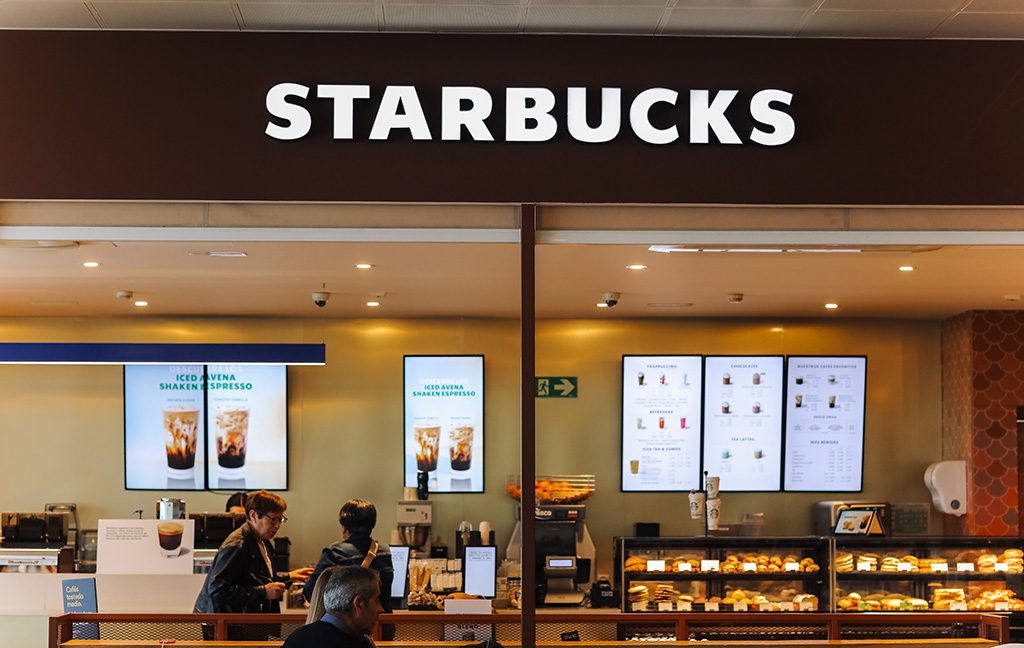
I bring this up because a couple that lives near us in Las Vegas had a terrifying incident at a local Starbucks. Lauren Weyand writes on Nextdoor:
“5 or 6 teenage kids came in shirtless, shoeless, and screaming profanities at each other…using incredibly vulgar language and pulling all of the food products out of the fridge section with no intention to buy anything. They asked the cashier for large water, one for each of them. Each of them was given water. They were heading out of the store.
My husband saw them line up — waters in hand — and said, ‘Ready, go!’ Before I knew it, I was hit in the head with a water cup. Two large cups of water doused our computers and us. We were startled and overwhelmed by what had happened. The whole store acknowledged the incident and asked us if we were okay. The Starbucks staff said nothing and started mopping up the mess. Nobody contacted the police or managers to ask for help with the situation that had just occurred.”
Weyand continues that she and her husband later returned to Starbucks to speak to the manager about what had happened. They were told they could not have video of the incident, and no police report had been filed because an employee got tired of waiting for the police to answer the phone, so they hung up and didn’t try again. The manager then led them to the door and told them more information would be forthcoming.
Look, we could turn this issue into a political or generational topic and press hot buttons all day long. Let’s not – that isn’t what this commentary is about.
At the current point, the Weyands must buy two new laptop computers, as neither of the ones they were using at Starbucks is now working because of the water damage. The Starbucks helpline – using the term “help” a bit loosely here – told them the case was closed and had been resolved, even though nothing was truly handled. From Weyand’s perspective, Starbucks has chosen the profane, shirtless troublemakers who threw water in their store over two loyal customers.
When I contacted Lauren Weyand, she confirmed that Starbucks remains silent – which she understandably perceives as a lack of concern and commitment for their customers.
In the frequently negative world of social media, some are questioning if Starbucks has any liability in this matter. I’m not a lawyer, so I don’t know the correct answer – but the important issue is that we should care less about liability and be more concerned about the customer experience.
What did United do in the wake of the PR disaster over the music video, “United Breaks Guitars”? As I relate in my new book, “The Ultimate Customer Experience,®” they licensed the video from Carroll to use in their training curriculum. They’ve hired him to speak at meetings for them to emphasize the importance of the customer experience.
And United’s share price has gone from $3.25 when Carroll’s video was the hottest thing on YouTube to closing today at $53.34! That’s what happens when you listen to your customers, learn from your mistakes, set things straight with those you have wronged, and focus on the Ultimate Customer Experience!
Starbucks may save a couple of grand by staying silent and not offering the Weyands replacement laptops, hoping they’ll just give in and give up. But just like United discovered how they could be “penny wise and pound foolish,” we’ve seen from experience that ANY business, no matter their size, can get on the wrong side of the public and lose millions when basic empathy and concern for the customer is ignored.
Every customer has a right to presume they aren’t going to have water thrown at them and have their computers ruined because they chose to do business with you.
So, what should Starbucks do? I’d suggest the minimum is that they apologize, replace the laptops, and provide the Weyands with a couple of gift cards with handsome amounts attached.
(They might also increase security so that shirtless, shoeless individuals can’t enter their stores in violation of health ordinances…and provide the store’s video to the police so they can press charges.)
Starbucks should learn from its mistake. Because they didn’t get it right, they should take advantage of the opportunity to make it right. If they fail, they may discover more people than a nice couple here in Vegas who are beginning to question if it’s worth a trip to get coffee from them, as opposed to their competition, if the experience is going to be so inferior – even problematic.
(Full disclosure: I’ve had the privilege of working with United and consider their Chief Customer Officer, Linda Jojo, a friend.)
The Ultimate Customer Experience® book is now available – get yours today!
It can be tempting to oversell our products and services in today’s competitive world. But this approach can backfire, making customers and prospects want to avoid you altogether.
This aspect has always struck me as slightly ironic, as no person wants to be around a pushy salesperson — even pushy salespeople when THEY are the customer! Yet we can easily fall into the trap of overdoing it when it comes to our own products.
Here are a few key things to keep in mind if you want to avoid over-selling:
Remember that your customers are people too, and nobody likes to be “sold.” Instead of thinking about how you can make a sale, focus on building a relationship. Focus on building relationships with potential customers rather than solely on making a sale.
In my book, ICONIC, we discuss how top producers in every industry are the ones who focus on creating Ultimate Customer Experiences ® — not those who push prospects to the point of surrender or escape. By getting to know customers personally, we can pave the road that will ultimately lead to more sales.
Next, don’t be afraid of competition. In many cases, customers will appreciate having multiple options from which to choose.
Your job is to become the most distinctive option so that you do all that is possible to ensure selection. This means you constantly ask: what is unique and remarkable about doing business with you — as opposed to your competition?
Finally, focus on engagement rather than hard selling. If you can get customers involved with your product or service in a meaningful way, they’ll be more likely to buy from you down the road.
As mentioned earlier, customer engagement is a key to avoid the appearance of over-selling.
Here are four steps to help you improve:
Make it easy for customers to give you feedback. You can make it easier for them to let you know when you provide them with a way to do business that is simple and convenient. Having this in place will also alert you when there is friction in your process that needs to be eliminated.
Use social media to start a conversation. For example, use short videos that explain the value of your product or service (from the customer’s perspective) and post them on TikTok, YouTube, Facebook, and Twitter. If you’re not using social media to its maximum benefit for connecting with customers, you’re missing out on a huge opportunity.
Get personal. Customers like doing business with people they know and trust — get to know your customers on a personal level. Examine your CRM and other tools to see if you’re recording easily accessible information that helps you remember — and use — your customers’ personal preferences.
Make it fun. As mentioned, nobody wants to be sold to — but everyone likes to have fun. If you can find ways to make your product or service more enjoyable, customers will be more likely to engage with you — and therefore, buy from you. The goal is NOT to be frivolous — but it IS to enhance the enjoyment factor of doing business with you. No one likes friction when dealing with any organization.
The key is to strike the right balance between promoting your wares and engaging with potential customers. If you come across as too pushy, people will tune you out. But if you’re too subtle, they may not even realize that you have something to offer.
Finding the sweet spot can be tricky, but it’s worth taking the time to get it right. By following these tips, you can avoid over-selling and instead focus on building relationships, engaging with customers, and becoming the most distinctive option in your industry.
(We would love to assist you in finding that “sweet spot” in customer engagement! Contact me here for more information on how keynote presentations, consulting, coaching, and virtual training can move you and your organization to distinction.)
At a time when our world seems increasingly divided and fraught with conflict, it is more important than ever to be kind and compassionate toward one another. Whether interacting with customers or colleagues, friends or family members — or even total strangers — we should always try to display good intentions and show courtesy and respect.
This pervasive sense of meanness and anger in today’s culture is constantly perplexing to me. It’s showing up in our businesses and displaying itself in almost every walk of life.
A primary aspect of a great business and extraordinary customer experiences is simple respect and kindness. Here are three steps we can take to display that we care:
1. Listen more and talk less. We can learn a lot about someone by genuinely listening to them without interruption or judgment.
2. Seek first to understand, then to be understood. This is a principle from Stephen Covey’s classic book “The 7 Habits of Highly Effective People.” It means that we should try to see things from the other person’s perspective before communicating our point of view.
3. Put ourselves in the other person’s shoes. This is similar to the previous point, but it takes it one step further. Not only should we try to understand where the other person is coming from, but we should also try to empathize with them and feel what they are feeling.
Just because a person is from a differing political viewpoint, or a dissimilar religion or a different race or gender doesn’t mean they deserve disrespect. Today’s social media has created a lot of “keyboard courage” — people sending messages via Twitter or Facebook that they would have difficulty saying in person to someone. However, part of what we’re seeing is a lowering of the standards of common courtesy. After you get away with bad behavior online for a while, perhaps it becomes easier for many to assume that you can act that way in person, as well.
Here’s a fundamental challenge when it comes to this problem. As I state in the book “ICONIC,” when it comes to reciprocal respect, the key is that YOU must go first.
This is NOT to say you should alter your opinion.
It’s not to say you should diminish your beliefs.
However, you cannot wait for the other person to show you respect before sending it their way.
That kind of “I’ll do it if you do” approach will never work! It is also antithetical to the principles of respect and kindness. Instead, we need to proactively show others that we care about them — not just with our words but with our actions.
By practicing these small acts of kindness and courtesy at every opportunity, we can bring more compassion and empathy into the world around us. If more people made a conscious effort to be just a bit gentler toward one another, perhaps we could begin to heal some of the wounds currently ripping our society apart.
Even if we only make a slight difference in this world, that would still be worth doing. Let’s try a little kindness today — in our daily interactions with others, as well as in our broader efforts to create a better society.